
A badly decayed or infected tooth can cause more than just pain. You may feel sensitivity while drinking something hot or cold, discomfort while chewing, swelling around the tooth, or even a constant throbbing pain that makes it difficult to sleep. In many such cases, Root Canal Treatment (RCT) can help save the natural tooth and prevent the infection from spreading.
At V Care Dental and Implant Centre, we provide careful and patient-friendly root canal treatment in Bhiwadi for teeth affected by deep decay, infection, cracks, or injury. Our approach is to first understand the condition of your tooth and then recommend the most suitable treatment rather than suggesting a procedure without proper examination.
If you are searching for a dentist in Bhiwadi for tooth pain or an infected tooth, timely consultation can often make treatment simpler and help preserve your natural tooth.
What Is Root Canal Treatment?
Root canal treatment is a dental procedure used to treat infection or inflammation inside a tooth.
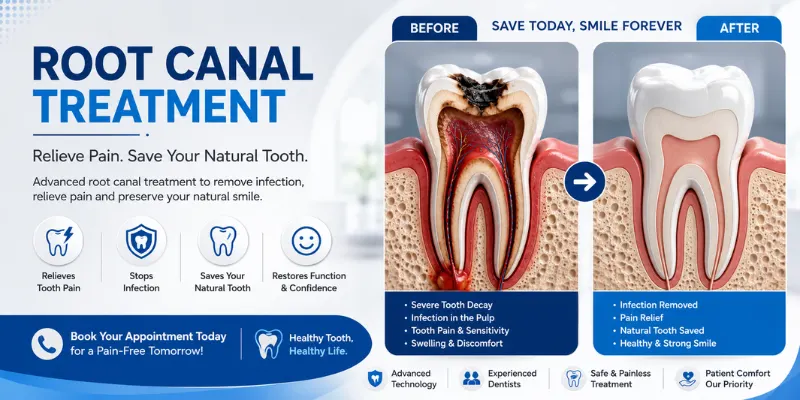
Every tooth has a soft inner area called the pulp, which contains nerves and blood vessels. When deep decay, trauma, cracks, or repeated dental procedures affect this area, bacteria can enter and cause infection.
During an RCT, the infected or damaged pulp is carefully removed. The inside of the tooth is cleaned, disinfected, shaped, and sealed. The tooth is then restored, often with a dental crown, to provide strength and protection.
The aim is simple: remove the infection, relieve pain, and save your natural tooth whenever possible.
When Do You Need a Root Canal?
Not every toothache requires an RCT. However, certain symptoms may indicate that the infection has reached the inner part of the tooth.
You may need an evaluation for root canal treatment if you experience:
- Severe or persistent toothache
- Pain while chewing or biting
- Prolonged sensitivity to hot or cold foods
- Swelling near the affected tooth
- Tender or swollen gums
- A recurring dental abscess or pus near the tooth
- Darkening or discolouration of a tooth
- A cracked or injured tooth
- Pain that becomes worse at night
- A deep cavity that has reached the pulp
Sometimes, an infected tooth may not cause much pain, especially when the nerve has been severely damaged. This is why a dental examination and appropriate X-ray may be required before deciding whether RCT is needed.
Why Should You Not Delay Root Canal Treatment?
A common mistake is to wait for dental pain to disappear on its own. Pain may temporarily reduce when the nerve inside the tooth becomes severely damaged, but that does not necessarily mean the infection has gone away.
If an infected tooth is left untreated, the infection can spread to the tissues around the tooth and may result in swelling, an abscess, bone damage, or the need for extraction.
Early treatment gives you a better opportunity to save the natural tooth.
If you have ongoing tooth pain or sensitivity, visiting a dental clinic in Bhiwadi for an examination is a better option than repeatedly taking pain medication without addressing the underlying problem.
Benefits of Root Canal Treatment
The biggest advantage of RCT is that it can help preserve your natural tooth instead of removing it.
Helps Relieve Tooth Pain
Once the infected or inflamed pulp is treated, the source of the dental pain can be addressed. Most patients seek treatment primarily because they want relief from persistent discomfort.
Saves Your Natural Tooth
Whenever a tooth can be successfully restored, keeping it is generally preferable to extracting it. Your natural tooth can continue to support normal chewing and function.
Stops the Spread of Infection
Root canal treatment removes infected tissue from inside the tooth and helps prevent the infection from progressing into surrounding tissues.
Restores Normal Chewing
After the tooth is properly restored, you can generally return to normal chewing and daily activities.
Maintains Your Smile
A treated tooth can be restored to look natural, particularly when a tooth-coloured restoration or crown is suitable.
Root Canal Treatment Procedure: Step by Step
Many patients feel nervous when they hear the words “root canal”. Understanding what actually happens can make the process much easier.
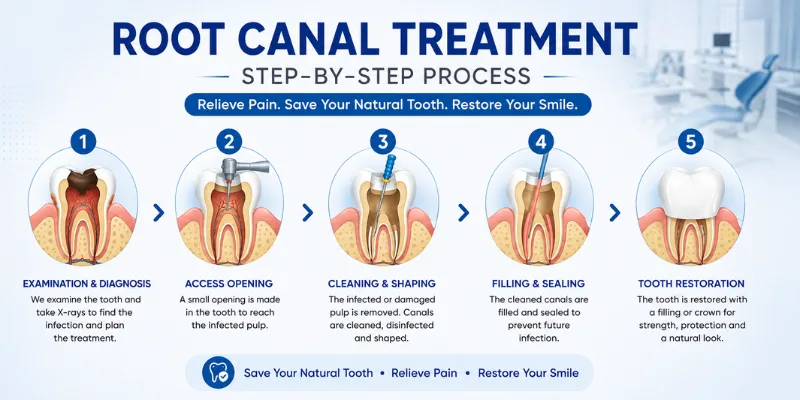
1. Dental Examination
The dentist examines the affected tooth and discusses your symptoms. An X-ray may be taken to understand the extent of decay or infection and the shape of the tooth roots.
2. Local Anaesthesia
Local anaesthesia is used to numb the area before treatment. This helps make the procedure comfortable.
3. Accessing the Tooth
A small opening is made in the tooth to reach the infected or damaged pulp.
4. Removing the Infected Pulp
The damaged pulp tissue is carefully removed from the inside of the tooth.
5. Cleaning and Shaping
The root canals are cleaned and shaped so that infected material and bacteria can be removed as effectively as possible.
6. Sealing the Root Canals
After cleaning, the canals are filled and sealed to reduce the chance of bacteria entering the treated area again.
7. Restoring the Tooth
Depending on the condition of the tooth, a filling or dental crown may be recommended. A crown is often considered when the tooth has lost significant strength due to decay or the RCT itself.
Is Root Canal Treatment Painful?
This is one of the most common concerns patients have.
With modern dental techniques and appropriate local anaesthesia, the RCT procedure itself is generally much more comfortable than many people expect. You may experience some tenderness or mild discomfort after treatment, particularly for a few days, but this usually settles as the tissues recover.
In many cases, the pain experienced before treatment is actually caused by the infection or inflammation rather than the root canal procedure itself.
If you are anxious about dental treatment, discuss your concerns openly with your dentist before starting. Knowing what will happen at each stage can make the experience more comfortable.
How Long Does Root Canal Treatment Take?
The treatment time depends on several factors, including:
- Which tooth is affected
- The number and shape of root canals
- The severity of infection
- Whether there is an abscess
- Whether additional appointments are required
- The type of restoration needed afterwards
Some cases can be completed in a single appointment, while more complicated or infected teeth may require multiple visits.
Your dentist can provide a more accurate estimate after examining the tooth.
Do You Need a Crown After RCT?
A root canal removes the infected pulp, but the tooth may already have lost considerable structure because of decay, cracks, or previous treatment.
Back teeth such as molars are exposed to significant chewing forces, so a crown may be recommended after RCT to provide additional protection.
However, not every root canal-treated tooth automatically needs the same type of restoration. The decision depends on the amount of healthy tooth structure remaining, the location of the tooth, your bite, and other clinical factors.
Your dentist can explain which restoration is appropriate for your particular tooth.
Aftercare Following Root Canal Treatment
Good aftercare helps protect the treated tooth while it settles and is being restored.
Follow These Simple Tips:
- Avoid chewing hard foods on the treated tooth until your dentist advises you otherwise.
- Follow the prescribed medicines exactly as directed.
- Maintain regular brushing and flossing.
- Keep the treated area clean.
- Complete the recommended final restoration on time.
- Contact your dentist if you notice increasing pain, swelling, or any unusual symptoms.
- Attend follow-up appointments when advised.
Do not ignore a temporary filling or delay the final crown for an extended period if your dentist has recommended one. A tooth that has undergone RCT may require additional protection from fracture.
Who Is a Good Candidate for Root Canal Treatment?
Root canal treatment may be suitable for a patient whose tooth has a healthy enough structure to be restored but has infected, inflamed, or damaged pulp.
It may be considered in cases involving:
- Deep dental decay
- Dental infection
- Repeated dental procedures on the same tooth
- Tooth cracks or fractures
- Dental trauma
- Damage to the pulp
A proper clinical examination is necessary before confirming treatment. In some severely damaged teeth, extraction may be a more appropriate option. Your dentist can discuss the available alternatives based on the condition of the tooth.
Root Canal Treatment for Children
Children can also develop deep cavities that affect the pulp of a primary or permanent tooth.
Depending on the child’s age, tooth, stage of development, and extent of infection, the dentist may recommend a suitable pulp treatment or root canal procedure.
Treating an infected baby tooth may sometimes help prevent pain, infection, and problems associated with premature tooth loss. Parents should seek dental advice rather than waiting for the child to outgrow the problem.
Why Choose V Care Dental & Implant Centre for Root Canal Treatment in Bhiwadi?
Choosing the right dental clinic is about more than simply finding a place that offers RCT. Patients want clear explanations, careful diagnosis, comfortable treatment, and guidance about what to do after the procedure.
At V Care Dental and Implant Centre, our focus is on providing personalised dental care based on the condition and needs of each patient.
Patient-Centred Dental Care
We explain the condition and treatment options in simple language so that you can make an informed decision about your dental health.
Focus on Saving Natural Teeth
When a tooth can be restored, preserving the natural tooth is an important part of treatment planning.
Comprehensive Dental Services
From diagnosis and root canal treatment to fillings, crowns, bridges, implants, and other restorative procedures, patients can access a range of dental services under one roof.
Comfortable Treatment Approach
We understand that dental treatment can make some patients nervous. Our team takes time to explain the procedure and make the treatment experience as comfortable as possible.
Experienced Dental Care
At V Care Dental and Implant Centre, treatment is planned with attention to your symptoms, dental history, examination findings, and long-term oral health.
When Should You Visit a Dentist?
Do not wait until tooth pain becomes severe before seeking help.
You should consider booking a dental consultation if you have:
- Toothache lasting more than a short period
- Repeated sensitivity
- Pain while biting
- Swollen gums
- A broken or cracked tooth
- A deep cavity
- A previous filling that has started hurting
- A tooth that has changed colour
Early evaluation may help identify the problem before it becomes more complicated.
Root Canal Treatment in Bhiwadi and Nearby Areas
V Care Dental and Implant Centre provides dental care for patients from Bhiwadi and nearby areas, making it convenient for people looking for professional dental treatment close to home.
We serve patients from:
- Bhiwadi
- Dharuhera
- Tapukara
- Tijara
- Khushkhera
- Nearby residential and industrial areas
If you are searching online for a root canal dentist in Bhiwadi, a dental surgeon in Bhiwadi, or a trusted dental hospital in Bhiwadi, you can consult our team for an assessment of your tooth and discuss the available treatment options.
Frequently Asked Questions About Root Canal Treatment
When a tooth can be predictably restored, root canal treatment can help preserve your natural tooth. Extraction removes the tooth and may later require replacement with an implant, bridge, or denture. Your dentist can explain which option is appropriate after examining the tooth.
The number of appointments varies. Some root canal cases can be completed in one visit, while others may require additional appointments depending on the infection and complexity of the tooth.
You can generally eat after the treatment, but it is better to wait until the numbness has worn off to avoid accidentally biting your cheek or tongue. Avoid hard or sticky foods on the treated tooth until your dentist confirms it is ready for normal use.
A treated tooth can remain functional for many years when the root canal is properly completed and the tooth receives suitable restoration and regular oral care. Longevity also depends on oral hygiene, chewing forces, the amount of remaining tooth structure, and regular dental check-ups.
It depends on the cause and severity of the problem. Some dental pain may be treated with a filling or other procedure, while infection involving the pulp may require RCT or, in certain cases, extraction. A dental examination is needed to determine the cause.
Delaying treatment can allow an infection to become more extensive. It may lead to swelling, an abscess, bone damage, or further weakening of the tooth. If you have persistent tooth pain, it is better to have it assessed early.
Not always. The need for a crown depends on factors such as the type of tooth, remaining tooth structure, bite forces, and risk of fracture. Your dentist will recommend the most suitable restoration after evaluating the tooth.